
WELDING MACHINE (9)
Professional Welding Machines & Equipment
Discover our comprehensive selection of welding machines designed for repair, fabrication, and industrial applications. Whether you're working in a garage, workshop, or large-scale fabrication facility, WeldingStop offers reliable welding equipment for every project.
Wide Selection
MIG welders, TIG welders, flux welders, and plasma cutting equipment
Complete Solutions
Machines, consumables, and accessories all in one place
Global Shipping
Free shipping on qualifying orders to 200+ countries
Expert Support
Dedicated customer service to help you find the right equipment
Competitive Pricing
Best prices on factory-compatible welding machines
Fast Delivery
Quick processing and reliable worldwide shipping
- Category
- FLUX WELDER Stud Weld LASER WELDER
- Brand
- WeldingStop PLAXCON
-

 Capacitor Discharge CD Stud Welding GunUS$ 39.99
 -

 M8 Collets for Stud Weld GunUS$ 2.99
 -

 M5 Collets for Stud Weld GunUS$ 1.99
 -

 M4 Collets for Stud Weld GunUS$ 2.99
 -
M6 Collets for Stud Weld GunUS$ 2.99
-

 M3 Collets for Stud Weld GunUS$ 2.99
 -
M10 Collets for Stud Weld GunUS$ 2.99

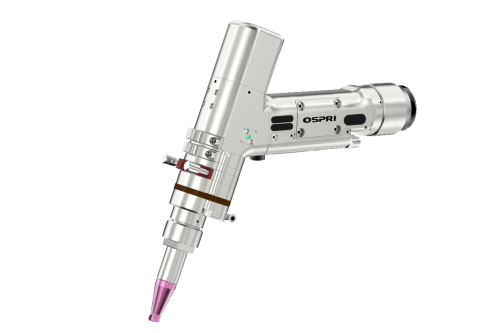

Welding Machine & Plasma Cutter Buying Guide
Whether you are outfitting a professional fabrication shop, a mobile repair rig, or a home garage, choosing the right welding machine or plasma cutter is a critical investment. WeldingStop offers a selection of reliable equipment designed for various applications, materials, and skill levels.
Types of Welding Machines Explained
| Machine Type | Best For | Pros | Cons |
|---|---|---|---|
| MIG Welder (GMAW) | Beginners, auto body repair, general fabrication, manufacturing. | Easy to learn, high welding speed, clean welds with minimal slag. | Requires shielding gas (unless using flux-core wire), less portable. |
| Flux-Core Welder (FCAW) | Outdoor use, dirty/rusty metal, farm repair, structural steel. | No shielding gas required, excellent penetration, highly portable. | Produces slag that must be chipped away, creates more smoke/spatter. |
| TIG Welder (GTAW) | Precision work, aluminum, stainless steel, aerospace, pipe welding. | Highest quality welds, precise heat control, no spatter. | Steep learning curve, slower welding speed, requires clean metal. |
| Stick Welder (SMAW) | Heavy equipment repair, pipeline, outdoor construction. | Works on dirty/rusty metal, highly portable, no shielding gas needed. | Requires frequent electrode changes, produces slag, difficult on thin metal. |
| Plasma Cutter | Cutting steel, aluminum, brass, copper, and other conductive metals. | Fast, clean cuts, minimal distortion, cuts any conductive metal. | Requires an air compressor, not for welding (cutting only). |
Key Specifications to Consider
- Input Voltage: 110V/120V machines are highly portable and plug into standard household outlets, but are limited to thinner metals (up to 1/8" or 3/16"). 220V/240V machines offer higher amperage for thicker materials (1/4" and above). Dual-voltage machines offer the best of both worlds.
- Amperage Output: The maximum amperage determines how thick of a metal you can weld or cut in a single pass. As a general rule for steel: you need about 1 amp for every .001" of metal thickness.
- Duty Cycle: This indicates how many minutes out of a 10-minute period the machine can operate at a specific amperage before needing to cool down. For example, a 30% duty cycle at 150A means you can weld for 3 minutes continuously, then the machine must cool for 7 minutes.
- Inverter vs. Transformer: Modern inverter-based machines are significantly lighter, more energy-efficient, and offer smoother arc characteristics compared to older, heavy transformer machines.
Frequently Asked Questions (FAQ)
Q: What is the best welder for a beginner?
A: A 110V/220V dual-voltage MIG welder is generally considered the best choice for beginners. The "point and shoot" nature of MIG welding makes it the easiest process to learn. Many modern MIG machines also support flux-core welding, allowing you to weld outdoors without shielding gas.
Q: Can I weld aluminum with a MIG welder?
A: Yes, but it requires a spool gun attachment. Aluminum wire is very soft and will often tangle (bird-nest) if pushed through a standard 10-foot or 15-foot MIG torch cable. A spool gun mounts a small roll of aluminum wire directly on the gun, eliminating feeding issues. You must also use 100% Argon shielding gas.
Q: What do I need to run a plasma cutter?
A: In addition to the plasma cutter itself, you will need a reliable air compressor. The compressor must be able to meet the CFM (Cubic Feet per Minute) and PSI (Pounds per Square Inch) requirements specified by the plasma cutter manufacturer. You also need a clean, dry air supply—installing an air filter/dryer is highly recommended to extend consumable life.
Q: What is a multi-process welder?
A: A multi-process welder combines MIG, TIG, and Stick welding capabilities into a single machine. These are excellent for hobbyists, mobile repair technicians, and small shops that need versatility without buying and storing three separate machines. Note that most multi-process machines offer DC TIG only (suitable for steel/stainless) and cannot TIG weld aluminum (which requires AC TIG).
Q: Does WeldingStop sell replacement parts for these machines?
A: Yes. WeldingStop specializes in aftermarket consumables and replacement parts. Whether you need MIG contact tips, TIG collets, plasma cutter nozzles, or replacement torch leads, we carry parts compatible with the machines we sell, as well as major brands like Miller, Lincoln, Hypertherm, and ESAB.
- Company Info
- ABOUT US
- Contact Us
- Returning & Refund
- Terms & Conditions
- Privacy Policy
- Insurance
- F.A.Q
- Feedback
- W.S.Sitemap
- User Center
- Forgot Password
- My Orders
- Tracking Order
- My Account
- Register
- Payment & Shipping
- Estimated Delivery Time
- Locations We Ship To
- Payment Methods
- Shipping Insurance
- FAQ
