

01 / THE SHORT ANSWER
Welding sparks:
light or flying metal?
The glow is light. The moving source can be a tiny piece of hot metal.
In steel arc welding, some molten material escapes as spatter. It can glow as it travels. The brilliant arc at the weld is different: it is an electrical discharge, not a shower of particles.
The images illustrate the ideas; they are not measurements of particle size, temperature or speed.
02 / TWO SCENES, DIFFERENT SOURCES
Look past the brightness.
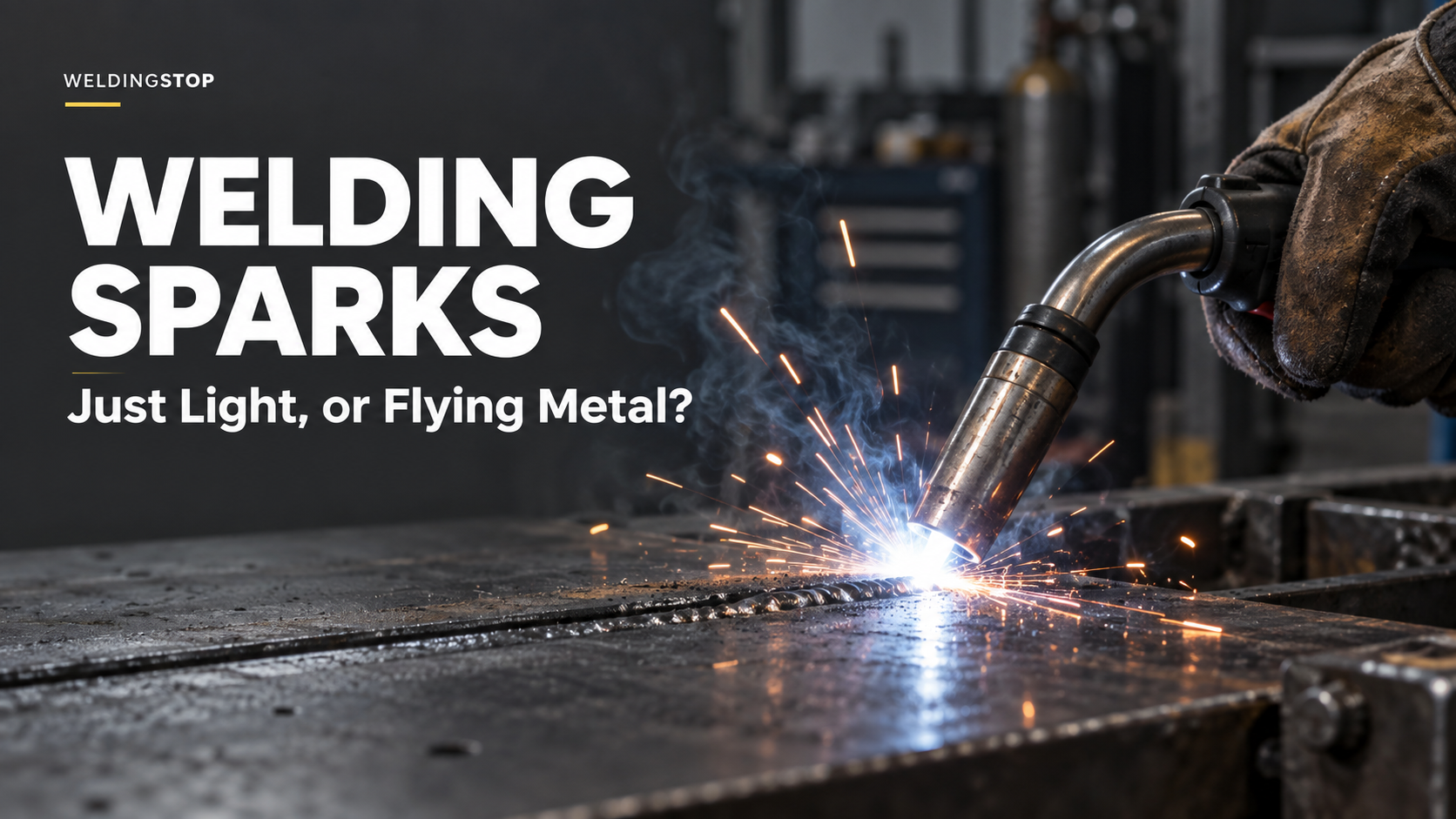
01 / The arc
An electrical discharge supplies heat at the weld. Its intense light is distinct from the material thrown out of the molten region.
02 / Flying spatter
Expelled molten droplets can emit visible light while hot. Spatter is not the useful transfer of filler metal into the weld pool.
03 / What remains
Some droplets solidify on nearby surfaces as small beads. A particle that has stopped glowing can still be hot.
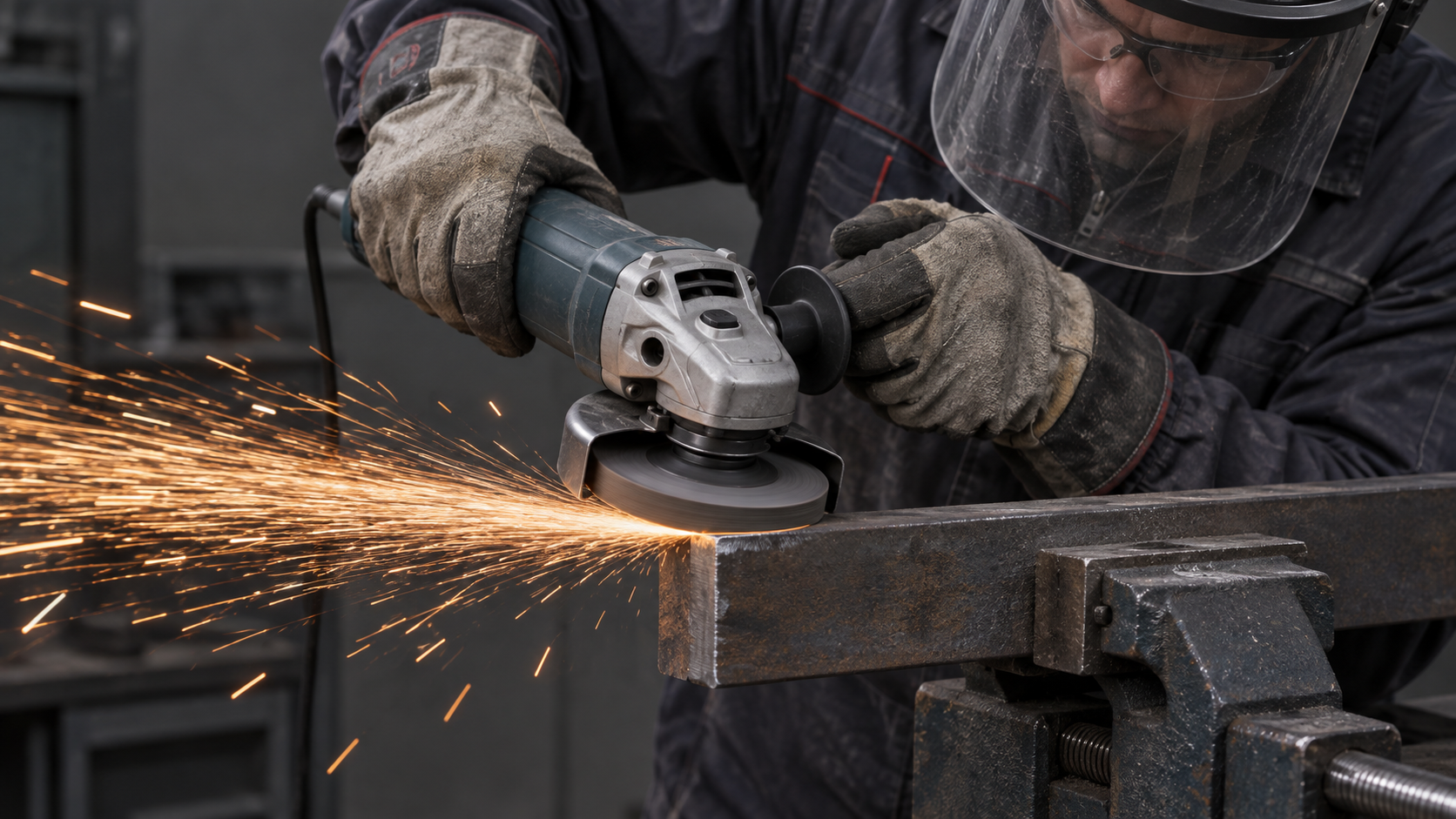
01 / The contact
Abrasive action removes material and generates heat. This is not an electrical arc between an electrode and the workpiece.
02 / The spark fan
Hot particles leave the contact region. Oxidation can contribute to their glow as they travel through air.
03 / The distinction
Both scenes can show bright moving particles. Their appearance alone does not tell you which process produced them.
03 / THE CAMERA ADDS TIME
A long trail.
A small source.
A camera gathers light over an interval. As a bright particle moves, its light can be recorded at multiple positions in the same picture.
The streak is a record of motion, not a long strip of metal.
What changes with exposure?
A shorter exposure can record less movement; a longer one can record more of the path. Particle speed, direction and brightness also affect the result. This illustration is not a calibrated exposure comparison.
Can the picture tell us its size?
Not reliably. Motion blur, focus and bright highlights can all change apparent size. A glowing trail is not a particle-size ruler.
04 / BEYOND THE SPECTACLE
More sparks.
Not more proof.
A dramatic photograph tells you little about the quality of the joint.
Does more spatter mean a better weld?
No. Spatter varies with process, settings, materials and conditions. Weld quality needs appropriate inspection, not a count of bright particles.
Are sparks harmless once they go dark?
No. Residual heat can still cause burns or start a fire. Brightness is not a safety test.
What about the light itself?
Arc radiation can injure eyes and skin. Use appropriate welding protection, screens and hot-work precautions. Ordinary sunglasses are not welding protection.
