All Categories
US$

Cart

Loadding...

Why Does My Weld Have Holes? 7 Causes of Weld Porosity and How to Fix Them

Jul 16, 2026

Weld Porosity Clinic

Your weld has holes. Choose the most likely cause below to open a full diagnosis, confirmation checklist, and treatment plan.

PATIENT WC-007
STATUS: NEEDS DIAGNOSIS
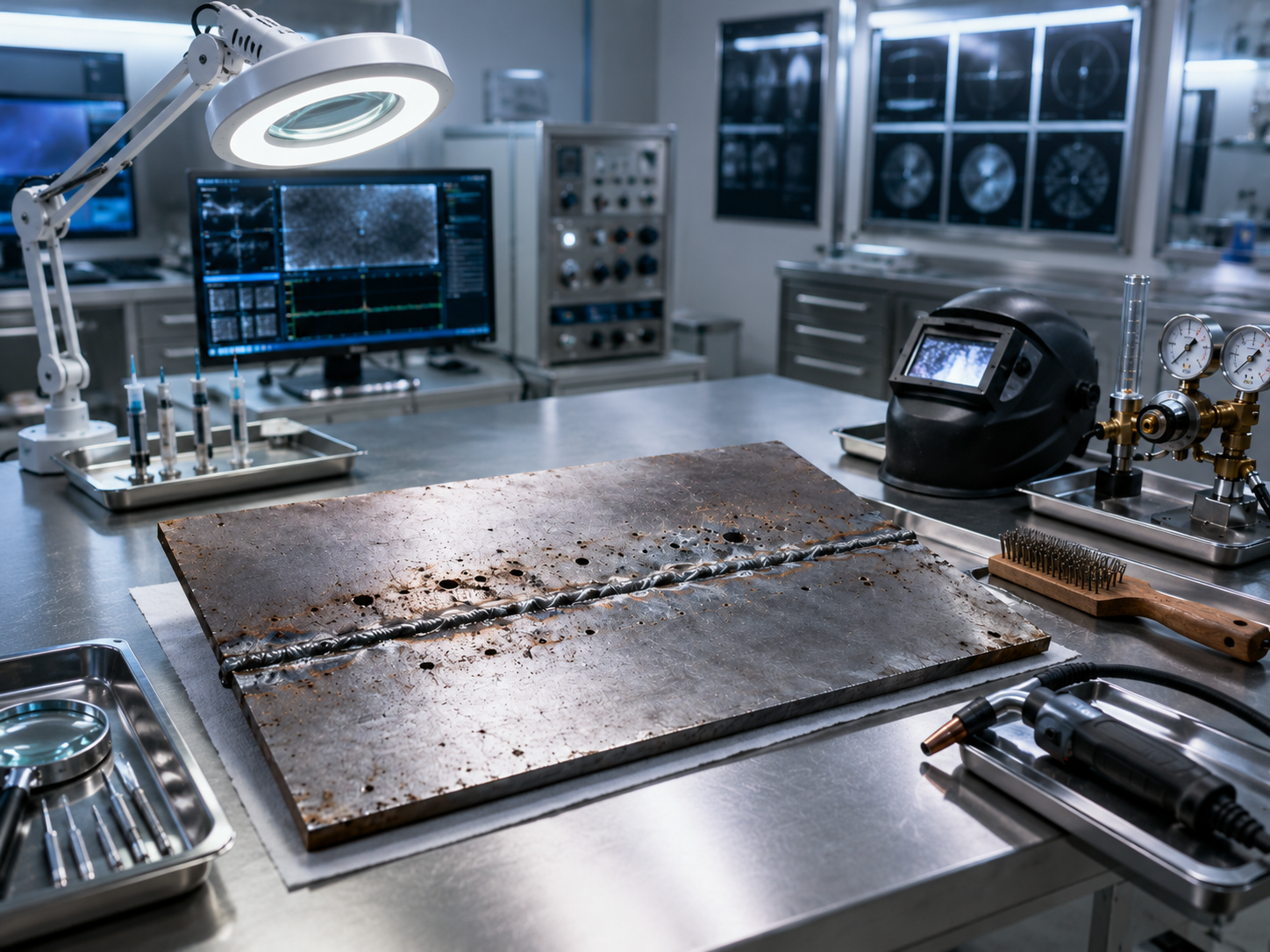
Porous weld specimen in a welding clinic
POROSITY DETECTED
LIVE WELD SURFACE SCAN
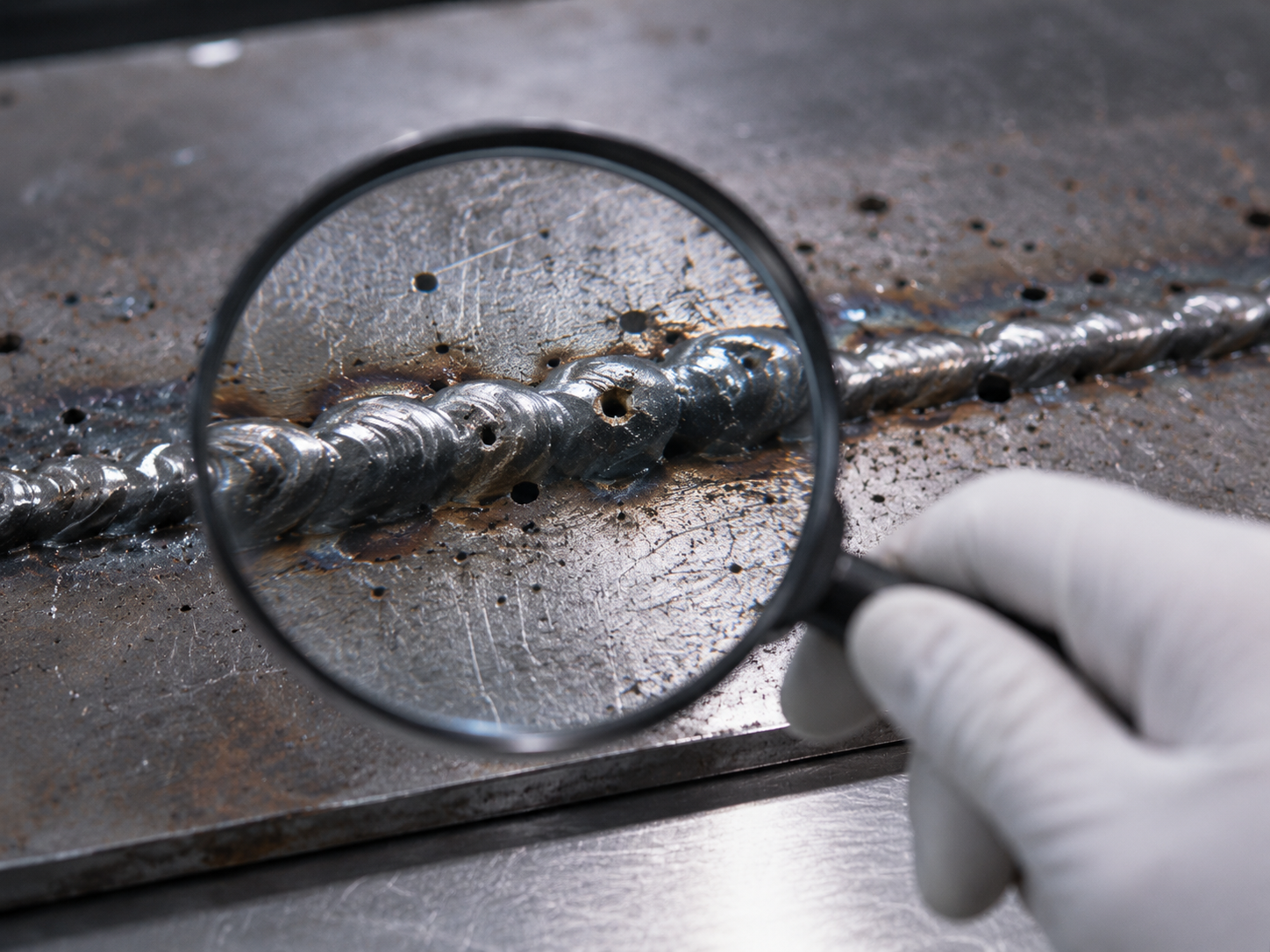
Magnified weld porosityVISUAL EXAM / 5X
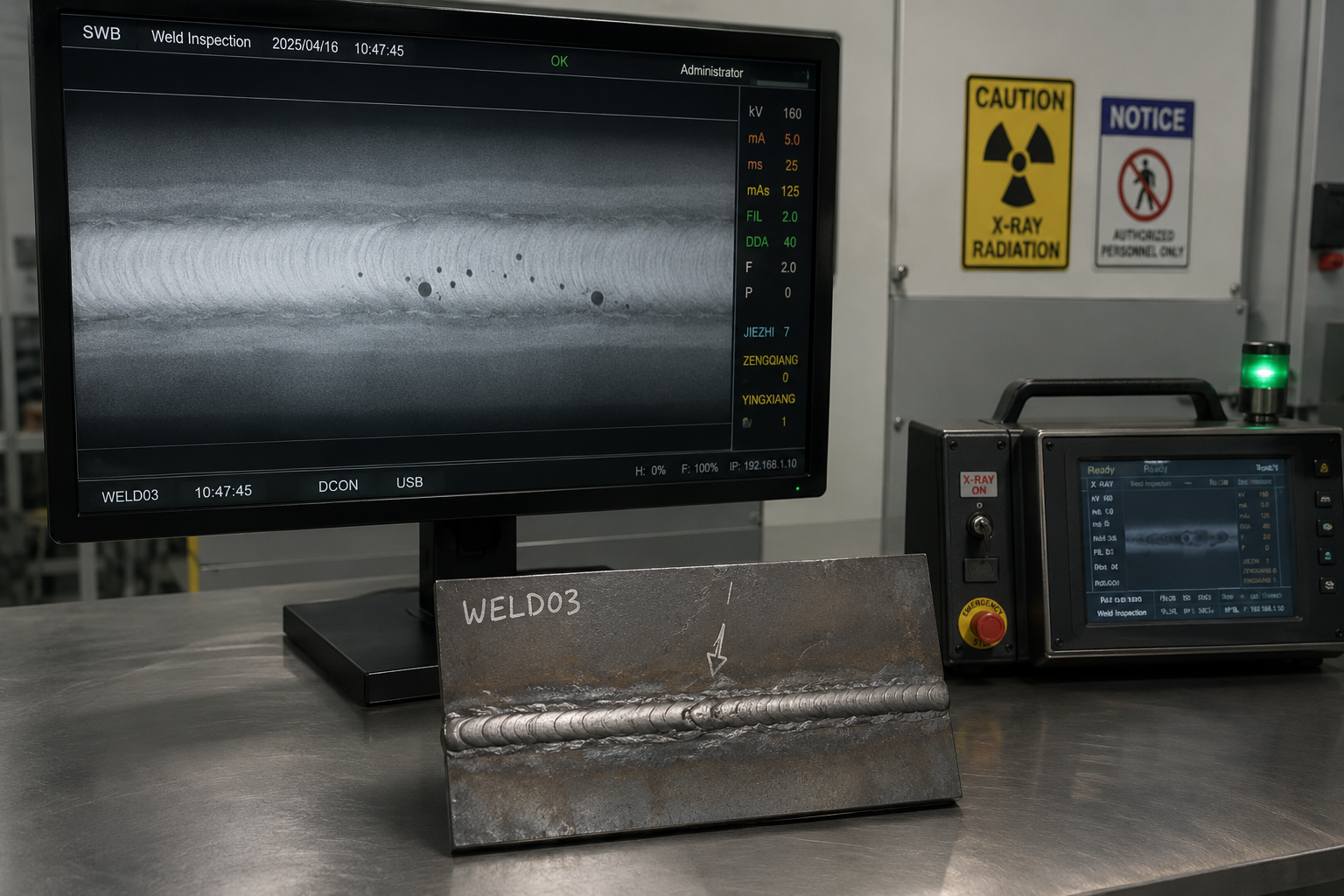
X-ray of weld porosityX-RAY / INTERNAL
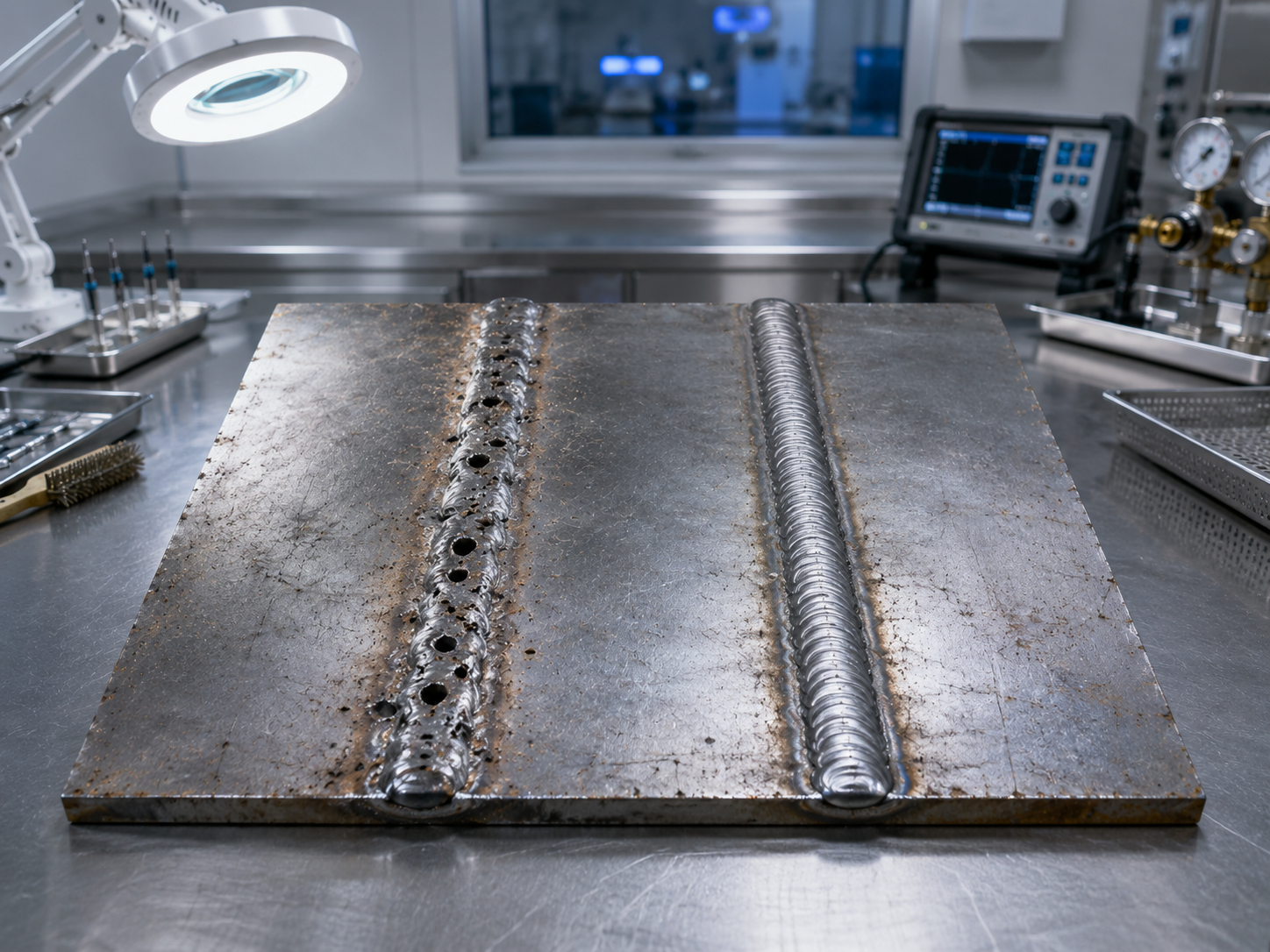
Healthy weld after repairHEALTHY CONTROL
STEP 01Select a suspected cause
STEP 02Confirm the warning signs
STEP 03Apply the treatment plan

What May Be Causing Your Weld Porosity?

Select one suspected cause. A complete diagnosis and solution will open directly below the cards.

DIAGNOSIS 01

Dirty or Contaminated Metal

COMMON CAUSE

WHY IT HAPPENS

Oil, rust, paint, mill scale, and moisture release gas as the molten weld pool solidifies. The trapped gas forms surface holes or hidden internal voids.

HOW TO CONFIRM IT

  • Porosity returns after every pass.
  • The joint has rust, oil, paint, or dampness.
  • Grinding exposes additional contamination.
  • A clean test coupon welds normally.

TREATMENT PLAN

  1. Remove the porous weld metal.
  2. Grind the joint to bright metal.
  3. Degrease with a suitable cleaner.
  4. Allow all solvent and moisture to evaporate.
  5. Run and inspect a new test bead.
DIAGNOSIS 02

Incorrect Shielding-Gas Flow

CHECK FLOWMETER

WHY IT HAPPENS

Low gas flow leaves the puddle exposed. Excessive flow can become turbulent and pull surrounding air into the shielding envelope.

HOW TO CONFIRM IT

  • Read the flowmeter while gas is flowing.
  • Listen for interrupted gas delivery.
  • Compare indoor and outdoor results.
  • Inspect the nozzle and gas connections.

TREATMENT PLAN

  1. Use the recommended gas and flow range.
  2. For many indoor MIG jobs, begin near 20–30 CFH.
  3. Reduce excessive flow instead of increasing it.
  4. Shield the weld from drafts.
  5. Run another test bead.
DIAGNOSIS 03

Blocked or Damaged Nozzle

TORCH FRONT END

WHY IT HAPPENS

Spatter buildup, a distorted nozzle, blocked diffuser holes, or damaged seals can create uneven shielding coverage around the weld pool.

HOW TO CONFIRM IT

  • Porosity worsens during a long job.
  • Spatter narrows the nozzle opening.
  • The diffuser holes are partially blocked.
  • The nozzle is loose or distorted.

TREATMENT PLAN

  1. Turn off the equipment safely.
  2. Remove accumulated spatter.
  3. Inspect nozzle, diffuser, and seals.
  4. Replace damaged consumables.
  5. Verify an even gas pattern.
DIAGNOSIS 04

Gas-System Leak

PRESSURE LOSS

WHY IT HAPPENS

Loose fittings, cracked hoses, or damaged torch connections allow shielding gas to escape before it reaches the weld zone.

HOW TO CONFIRM IT

  • The regulator reads normally but torch flow is weak.
  • Gas consumption is unusually high.
  • Hoses show cracks or worn areas.
  • Connections hiss during gas flow.

TREATMENT PLAN

  1. Close the cylinder safely.
  2. Inspect every hose and fitting.
  3. Use an approved leak-detection solution.
  4. Tighten or replace faulty parts.
  5. Never test a leak with a flame.
DIAGNOSIS 05

Wind or Air Movement

FIELD CONDITION

WHY IT HAPPENS

Wind, open doors, and nearby fans can push shielding gas away before the molten weld pool solidifies.

HOW TO CONFIRM IT

  • Indoor welds are clean but outdoor welds are porous.
  • A nearby fan is operating.
  • The defect appears on the windward edge.
  • Results improve behind a temporary screen.

TREATMENT PLAN

  1. Stop direct airflow across the joint.
  2. Install suitable wind screens.
  3. Close nearby doors where possible.
  4. Do not simply maximize gas flow.
  5. Consider a suitable self-shielded process.
DIAGNOSIS 06

Damp Consumables

MOISTURE

WHY IT HAPPENS

Moisture in wire, filler rod, electrodes, or flux introduces hydrogen and steam into the arc and weld pool.

HOW TO CONFIRM IT

  • Worm tracks appear in the weld.
  • Consumables were stored in a damp area.
  • Packaging is damaged or open.
  • Fresh consumables improve the result.

TREATMENT PLAN

  1. Replace heavily contaminated consumables.
  2. Store wire and rods in dry conditions.
  3. Follow manufacturer reconditioning guidance.
  4. Keep flux and electrodes sealed.
  5. Repeat the weld with dry material.
DIAGNOSIS 07

Welding Technique

OPERATOR CHECK

WHY IT HAPPENS

A long arc, extreme torch angle, excessive stickout, or fast travel can move the puddle outside its protective gas envelope.

HOW TO CONFIRM IT

  • Porosity collects at starts or stops.
  • Only one side of the bead is affected.
  • Arc length changes during travel.
  • A controlled test bead improves immediately.

TREATMENT PLAN

  1. Shorten and stabilize the arc.
  2. Use the correct torch angle.
  3. Maintain the recommended stickout.
  4. Slow down if travel is outrunning coverage.
  5. Protect starts and stops until solidification.

Before and After Treatment

Porous weld before repairREJECT / POROSITY
Healthy weld after repairRELEASE / CLEAN WELD

30-Second Discharge Checklist

01Base metal is bright, dry, and oil-free.
02Shielding gas type and flow are correct.
03Nozzle, diffuser, and seals are clean.
04Hoses and fittings pass a leak check.
05No draft crosses the weld zone.
06Wire, rods, electrodes, and flux are dry.
07Arc length, angle, and speed are controlled.
08The repaired weld has been inspected.

Weld Porosity FAQ

Can I weld over porosity?

No. Remove the affected weld metal, correct the source, then reweld and inspect. Covering visible holes may trap defects beneath the new pass.

Can too much shielding gas cause porosity?

Yes. Excessive flow can become turbulent and draw surrounding air into the shielding envelope.

Why does porosity appear only outdoors?

Wind is probably displacing the shielding gas. Use suitable wind screens or select a welding process designed for field conditions.

Is a porous weld still strong?

Porosity reduces effective weld area and may indicate internal voids. Acceptance depends on the applicable welding code and inspection requirements.

Keep Your Welding Setup Healthy

Explore welding machines, torch consumables, gas nozzles, contact tips, plasma accessories, and workshop tools.

Visit WeldingStop.com →

<< Why Is My Auto-Darkening Welding Helmet Not Working? 8 Things to Check

>> Flux Core vs MIG Welding: Which One Should You Use?