
Ceramic Cups and Nozzles (62)


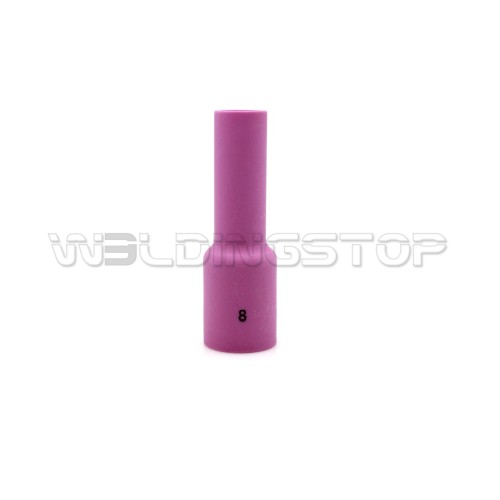

TIG Torch Ceramic Cups and Nozzles Selection Guide
The ceramic cup (also called a nozzle or gas nozzle) is the component at the end of the TIG torch that directs shielding gas around the weld pool. Choosing the correct cup size and style is critical for effective shielding coverage and weld quality. WeldingStop offers a comprehensive range of ceramic cups and nozzles for all standard TIG torch series, including WP-9, WP-17, WP-18, WP-20, and WP-26.
TIG Cup Number vs. Size Guide
| Cup Number | Inside Diameter | Best Application |
|---|---|---|
| #4 | 1/4" (6.4mm) | Tight spaces, thin material, low amperage work. |
| #5 | 5/16" (7.9mm) | Light to medium-duty general welding. |
| #6 | 3/8" (9.5mm) | Most common size; general-purpose TIG welding, good all-around choice. |
| #7 | 7/16" (11.1mm) | Medium to heavy-duty welding, improved gas coverage. |
| #8 | 1/2" (12.7mm) | Heavy-duty welding, stainless steel, titanium. Maximum gas coverage. |
| #10 | 5/8" (15.9mm) | Wide gas coverage for large weld pools, pipe welding. |
Cup Material Comparison
| Material | Advantages | Limitations |
|---|---|---|
| Standard Ceramic | Affordable, good heat resistance, widely available. | Opaque; cannot see the weld pool through the cup. |
| Pyrex Glass (Clear) | Transparent; allows visibility of the weld pool. Used with gas lens setups. | More fragile than ceramic; not suitable for high-amperage work. |
| Alumina Ceramic | Higher temperature resistance than standard ceramic. | More expensive. |
Frequently Asked Questions (FAQ)
Q: What cup size should I use for TIG welding aluminum?
A: For TIG welding aluminum, a larger cup (#7 or #8) is generally recommended. Aluminum welding typically requires higher amperage and produces more heat, which benefits from the wider gas coverage that a larger cup provides. When using a gas lens setup, a #8 or #10 Pyrex cup is a popular choice for excellent shielding and visibility.
Q: How do I know when to replace my TIG ceramic cup?
A: Replace your ceramic cup when: (1) It has visible cracks or chips. (2) The inside is heavily coated with tungsten spatter or contamination that cannot be cleaned. (3) The cup is discolored or warped from overheating. A damaged cup will disrupt gas flow and lead to weld contamination.
- Company Info
- ABOUT US
- Contact Us
- Returning & Refund
- Terms & Conditions
- Privacy Policy
- Insurance
- F.A.Q
- Feedback
- W.S.Sitemap
- User Center
- Forgot Password
- My Orders
- Tracking Order
- My Account
- Register
- Payment & Shipping
- Estimated Delivery Time
- Locations We Ship To
- Payment Methods
- Shipping Insurance
- FAQ
